For information
+91-9873-503-555

Please wait..
Please wait..

For information
+91-9873-503-555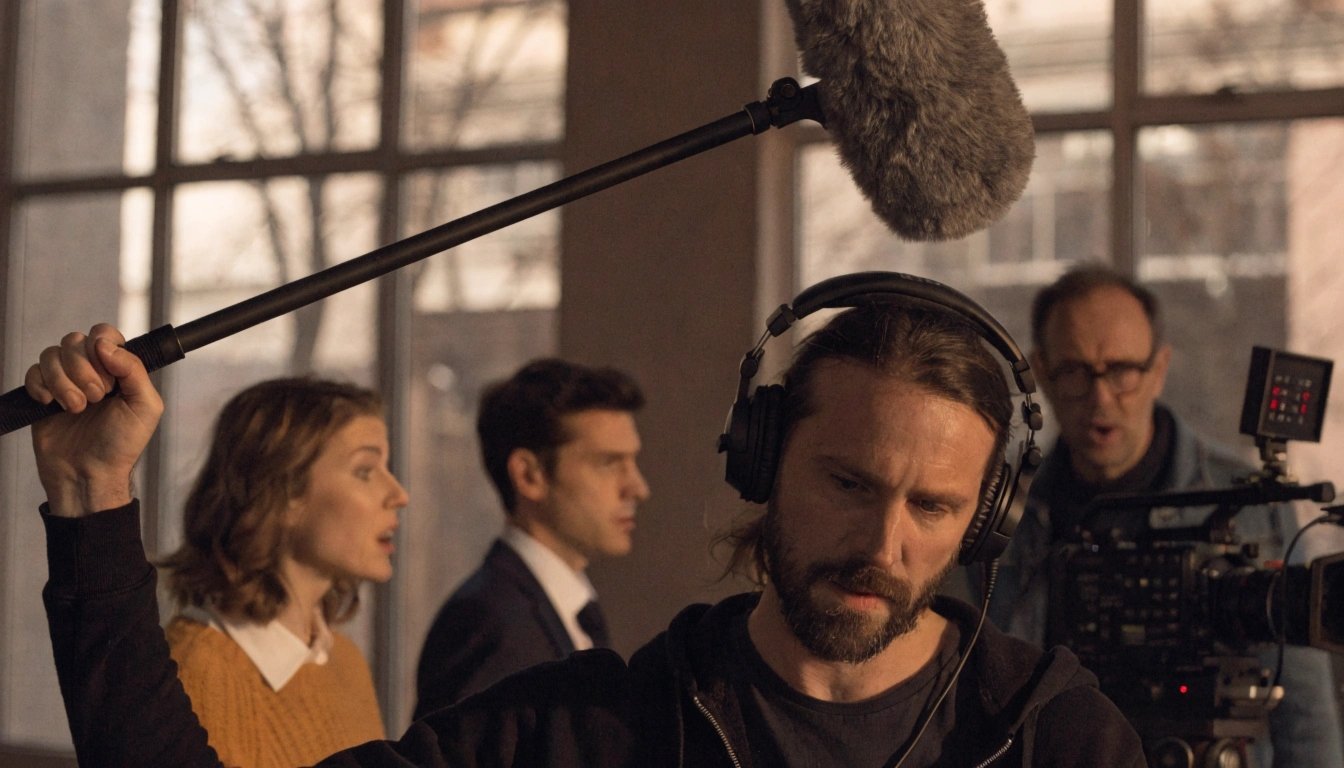
08 Jan 2026 Blog
Eye-catching visuals are important for drawing attention, but the key to engagement is exceptional audio. In movie-making, audio can mean the difference between a successful project and a failure. Whether you're a novice filmmaker or a professional, knowledge of the basic audio equipment is a must for any movie experience.
Before delving into equipment, it is essential to understand that viewers are surprisingly tolerant of minor video flaws but that audio issues will drag them right out of your story. Invest in high-end audio equipment to ensure that your video is clear, easy to work with in post-production, and simple to listen to.
Workhorses of film audio,” shotgun microphones are extremely directional, allowing them to pick up sound from one source while disregarding surrounding noise. The Sennheiser MKH 416 and Rode NTG3 are professional shotgun microphones, renowned for excellent sound clarity, as well as weatherproofing capabilities, making them ideal to use in outdoor shooting. These are always mounted on a boom pole, just off-camera.
Also known as "lav mics" and "lapel mics," these miniature microphones are clipped to an actor’s clothing to deliver quality and close captures. These mics are a major asset for scenes featuring dialogue and/or for hard-to-boom capture shots. Such microphones include Sennheiser G4 and Rode Wireless GO II.
"Boom," on the other hand, refers to the pole itself. However, boom-mounted shotgun mic's are still the benchmark for carrying conversations. The boom man has the capability to follow actors while positioning the mic perfectly for clean sound.
Devices such as the Zoom F6 and the Sound Devices MixPre line have transformed the world of independent filmmaking. These handheld recorders come with multiple XLR inputs and the ability to record multiple tracks of audio simultaneously. This is particularly helpful during the mixing process in the post-production stage.
While professional disk recorders offer higher quality, cameras equipped with good audio recording ability may be very helpful for smaller productions. Still, to have full control over the video and to achieve better quality, professional producers usually make audio recordings separately.
Carbon fiber boom poles from brands like K-Tek and Ambient offer the perfect balance of lightweight construction and durability. Extendable poles allow operators to adjust length based on the scene requirements, typically ranging from 6 to 18 feet.
Outdoor filming presents unique audio challenges, particularly wind noise. Foam windscreens provide basic protection, while furry "dead cat" covers offer superior wind rejection for challenging conditions. The investment in quality wind protection pays dividends in usable audio.
These specialized holders suspend microphones within elastic bands, isolating them from handling noise and vibrations. Essential for boom operation, shock mounts ensure that every movement of the boom pole doesn't translate into audio artifacts.
Don't underestimate the value of quality cables. Balanced XLR cables are capable of maintaining signal quality over longer distances and have superior noise rejection characteristics when compared to standard cables. Invest in robust and shielded cables.
Technical Closed-back Headphones - These headphones are a necessity when it comes to audio listening on location. Even to date, the Sony MDR-7506 remains the industry standard due to the ability to produce clean sound, allowing problems to be detected on location instead of in post.
Mixers
For more complex productions involving multiple audio inputs, portable mixers provide real-time level adjustment and monitoring capability. Sound Devices and Zoom make available dependable solutions within a range of budgets.
Begin with the bare essentials: a good shotgun mic, a trusty recording device, a boom pole, and pro headphones. As you become more sophisticated in your projects, incrementally add to your arsenal wireless lavs, extra mics, and related gear.
At LA Filmz, we recognize the fact that professional sound equipment is a major outlay. Nevertheless, the divide that separates amateur and professional sound quality is the factor which could be the decisive element in ensuring that your film is realizing its full potential. Sound quality not only complements the visuals; it is what invokes the emotions.
Audio equipment in film production extends far beyond simply recording dialogue; it concerns capturing the sonic landscape that brings your story to life. Whether you shoot a short film, documentary, or feature-length production, investing in quality audio gear and learning how to properly use it will make a dramatic difference in your final product.
Remember, audiences may forgive fuzzy pictures but will not forgive mumbled dialogue or irritating peeps, so build your audio kit thoughtfully, learn proper techniques, and your films will sound as professional as they look.